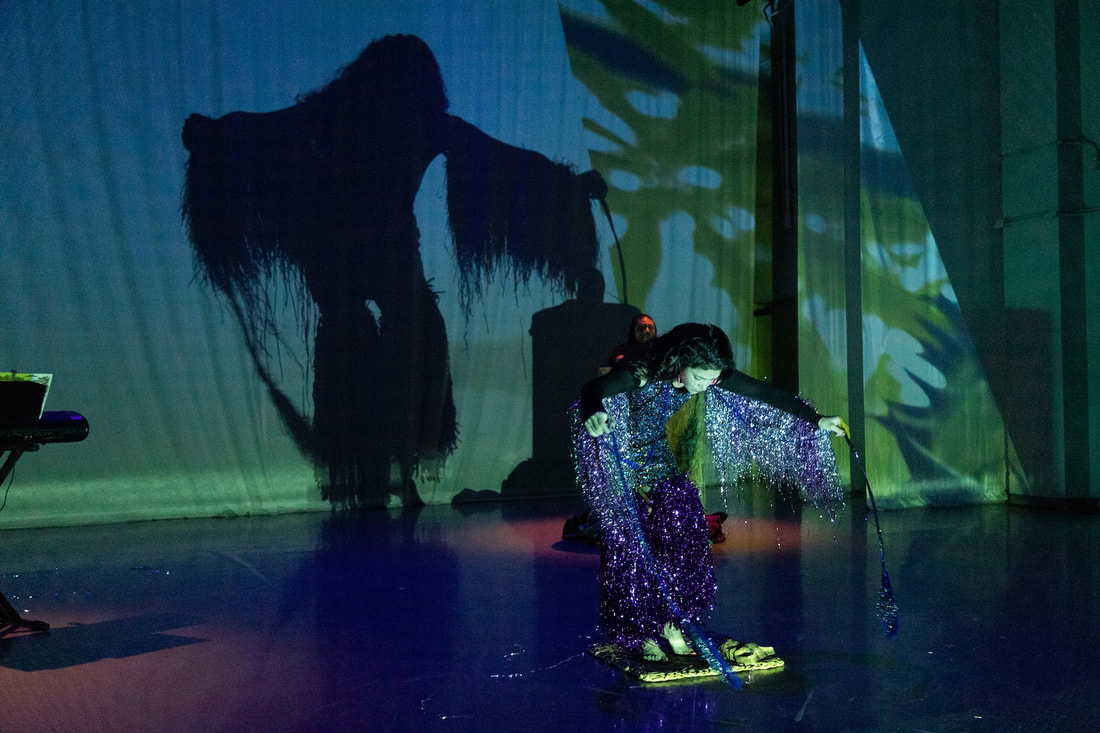
I primarily identify as an anti-disciplinary artist which means I feel unbound by any discipline, material, or approach. I work in 2d visual art, 3d sculpture and installation, 4d performance and video art, music, theater, literature, ephemera, pubic art, social practice, and transdisciplinary archival research and process-based methods. My work is conceptual, decolonial, political, and experimental. Rooted in Indigenous Futurisms, Lenca cosmovision, Latinx artesenias of Mesoamerica, and Liberation Theology of El Salvador, I am interested in the intersection of Low Art and High Art, the forgotten, the unseen, and the Nepantla in-between spaces where God, ancestors, and dreams live. I create conceptual landscapes and immersive spaces for embodied storytelling and healing through projections, texture, color, my body and voice, and the cathedral of nature.
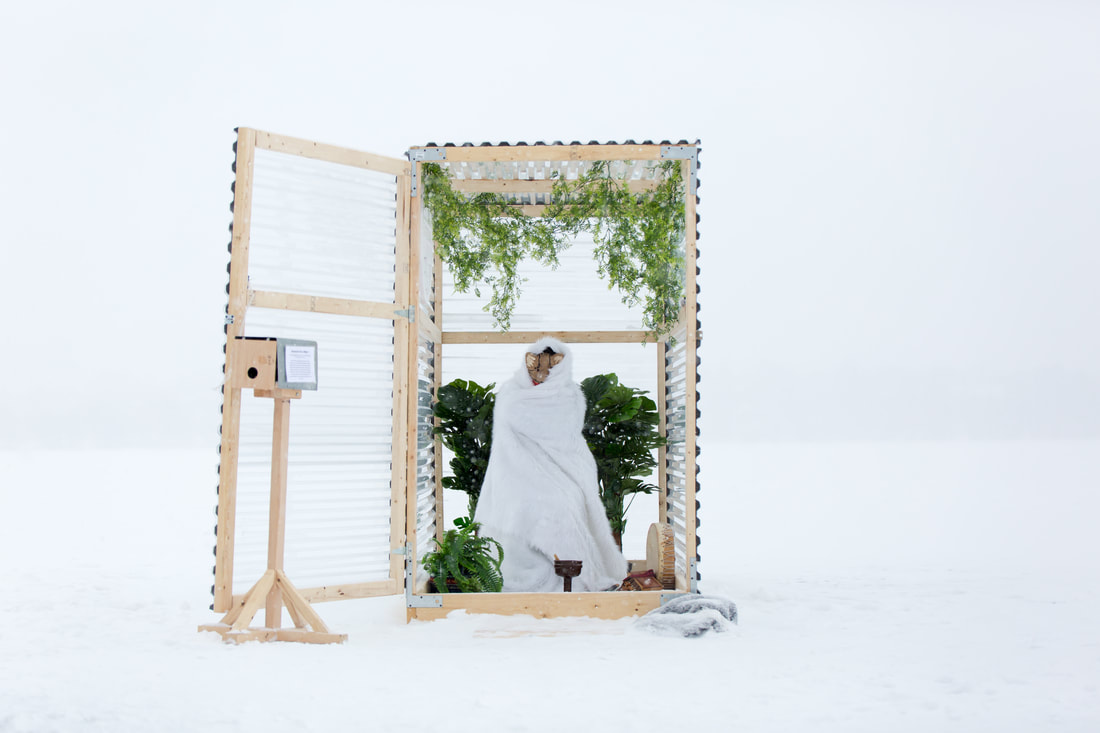
The recurring themes in my work across disciplines are ethnoastronomy, animal stories, migrations, petroglyphs, climate resilience, apocalypse, resistance, freedom of the soul, and women. I approach my art practice from a perspective of Liberation Theology about shared and erased ancient histories. As a mixed person with multiple personal experiences (Indigenous Maya Lenca woman, mother, culture bearer, survivor, 2nd generation refugee, biracial and transracial adoptee, pastors’ kid, and artist living with invisible disability) I often try to create work in conversation with the ecumenical idea of the common table as a witness and testimonio to my experiences growing up in rural America for understanding and compassion. My work seeks to shift consciousness around immigration, borders, exodus and interconnectedness of Indigenous Peoples of the Americas. I also create work to revitalize traditional arts, cultural knowledge, and inspire Indigenous Central Americans living in the diaspora. My practice involves deep research into archaic Mesoamerican and ethnographic anthropology collections, such as that of Samuel K. Lothrop, a Smithsonian staff who visited El Salvador in 1924-1926, endangered language archives for songwriting, and archeological ceramic instruments.
My current work are conceptual landscapes that investigate and critique the erasure of women’s narratives and traditional arts. I am inspired by the traditional colors of Maya blues and indigo which recall weavings, pyramids, and plantations in Central America. A Grief Pot for Giants, contemplates the distorted erasure of women's narratives, the stars, and the land.